
Assessment Tests Training - Test The Talent
  • Ability Tests
    • Supplier of tests
      • SHL Test
      • People Test Logic Test
      • ACE Cognitive Test
      • AON Online Assessment (CUT-e) Practice Tests
      • Eligo practice tests
      • Garuda Logic Test
      • PI Cognitive Assessment Test
      • IST 2000 R Test
      • Thomas GIA Test
      • Talogy / Cubiks Test
      • Saville Test Practice
      • Matrigma Practice Tests
      • Mensa IQ Test
      • General Tests – Logical, Numerical & Verbal
    • About Test The Talent
      • Test The Talent is an English provider of aptitude tests. Our goal is to make test training as effective and educational as possible. We offer numerical, logical/inductive and verbal tests designed to match the real tests you will encounter when applying for your dream job.
  • About Test The Talent
    • Submenu
      • About Test The Talent
      • Frequently Asked Questions – FAQ
      • Articles about tests and preparation
      • Contact Test The Talent
      • Test The Talent in Danish
    • Money Back Guarantee
      • Remember that we will refund your money if you are not completely satisfied with Test The Talents' paid test set.
  • Log in
  • Menu Menu

People Test Person (PTP)

September 25, 2025/in Uncategorized/by Thomas Anderson

People Test Person (PTP): How to Succeed in the Personality Test

Want to stand out in your next recruitment process? Then it’s time to get familiar with People Test Person (PTP) – one of the most widely used personality assessments in Scandinavia. In this guide, we’ll break down what the test measures, how employers use it, and most importantly: how you can prepare smartly to increase your chances of landing your dream job.

Why is People Test Person (PTP) important?

Recruitment today is about much more than CVs and interviews. More and more employers are using personality tests to ensure that candidates not only have the right skills – but also the right personal traits for the role. PTP is one of the most popular tools for this purpose.

The key takeaway: PTP isn’t a test you can “pass” or “fail”. But by understanding the format and reflecting on your own strengths, you can answer more consistently, feel more confident, and leave a stronger impression on the employer.

Who is the test for?

People Test Person is widely used across the labour market. You might encounter it if you are applying for:

  • Graduate programmes or trainee roles
  • Leadership positions
  • Consultancy or specialist roles
  • Positions in organisations that value cultural fit

In other words: whether you’re a recent graduate or an experienced manager, PTP can appear as part of the selection process for your next career move.

How does People Test Person (PTP) work?

The test is developed by People Test Systems and is based on a scientific model that maps workplace behaviour and preferences. During the test, you respond to a series of statements by indicating the degree to which they apply to you. Your responses are analysed and presented as a personality profile.

What does PTP measure?

PTP does not measure intelligence or knowledge. Instead, it focuses on your natural behavioural tendencies. Examples include:

  • Collaboration: Do you prefer teamwork or working independently?
  • Leadership: How do you handle responsibility, influence, and decision-making?
  • Communication: Are you clear and relational, or more fact-oriented?
  • Motivation: What drives you – results, security, innovation, or collaboration?
  • Work style: Are you structured, flexible, creative, or analytical?

Your results are often compared to the expectations and requirements of the role. That’s why it’s important to be aware of the strengths you want to highlight.

How is PTP used in recruitment?

Once you’ve completed the test, recruiters receive a report summarising your behavioural patterns. This report can be used to:

  • Assess how well you fit with the company culture
  • Predict your performance in a given role
  • Create discussion points for the interview
  • Identify strengths and potential development areas

It’s important to remember: the test is a complement to interviews, references, and other selection methods. It’s not the only factor determining whether you get the job – but it can be decisive if you’re neck and neck with another candidate.

Can you practise for PTP?

Many people believe it’s impossible to prepare for a personality test. And it’s true – you can’t change who you are. But that doesn’t mean you should go in unprepared. In fact, practice makes you more confident and helps you perform better during the test.

Three ways to prepare:

  • Get familiar with the format: By practising test-like questions with Test The Talent, you reduce stress and know what to expect.
  • Reflect on yourself: Think about your strengths, work style, and motivators. This makes your answers more consistent.
  • Work on consistency: Employers look for stable behavioural patterns. Practice helps you avoid contradictions in your responses.

Common mistakes – and how to avoid them

From experience, we know that candidates often fall into the same traps. Here are the most common ones:

  • Trying to answer “correctly”: Don’t second-guess what you think the employer wants. It usually comes across as inauthentic.
  • Being inconsistent: Contradicting yourself in responses signals uncertainty.
  • Going in blind: Many candidates don’t prepare at all, leading to stress – which impacts their answers.

By practising with Test The Talent, you can avoid these pitfalls and focus on showing the best version of who you really are.

How Test The Talent supports you

At Test The Talent, you’ll find realistic practice tests inspired by People Test Person. Our tests are designed to give you confidence before the real thing. You’ll be able to:

  • Practise PTP-style questions
  • Understand the structure and logic of personality tests
  • Develop consistency in your answers
  • Boost your confidence before recruitment

The bottom line: You can’t change your personality overnight. But you can influence how confident, consistent, and professional you come across in the test – and that’s where practice makes all the difference.

Summary

People Test Person (PTP) is a powerful tool employers use to understand candidates’ behaviours and drivers. For you as a candidate, it’s an opportunity to show who you are – beyond your CV and qualifications. By preparing with the right resources, such as Test The Talent’s practice tests, you can:

  • Reduce stress and feel more confident
  • Answer more consistently and professionally
  • Increase your chances of taking the next step in your career

Want to succeed in PTP and other personality tests? Start practising today with Test The Talent and take one step closer to your dream job.

https://testttalent.com/wp-content/uploads/2022/12/ttt-logo.png 0 0 Thomas Anderson https://testttalent.com/wp-content/uploads/2022/12/ttt-logo.png Thomas Anderson2025-09-25 08:54:462025-10-01 11:48:12People Test Person (PTP)

DISC Profile – Types and colors

September 15, 2025/in Personality Tests/by Thomas Anderson

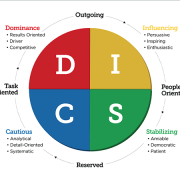
DISC is a personality model that describes human behaviour and communication styles based on four fundamental dimensions:

  • Dominance (D)
  • Influence (I)
  • Steadiness (S)
  • Conscientiousness (C)

The model is often used to understand differences between people, strengthen collaboration, and improve communication.

DISC is not a measure of intelligence or professional ability – rather, it is a way of understanding how individuals naturally act, respond, and thrive in different situations. Most people display traits from more than one type, but one or two usually stand out as the most dominant.

Each type is commonly associated with a colour, making them easier to remember and recognise:

  • 🔴 D – Red (Action-oriented and driven)
    Dynamic, results-focused, direct, and competitive.
  • 🟡 I – Yellow (Outgoing and enthusiastic)
    Sociable, positive, inspiring, motivated by relationships and community.
  • 🟢 S – Green (Friendly and supportive)
    Patient, steady, cooperative, seeking harmony and security.
  • 🔵 C – Blue (Logical and systematic)
    Analytical, precise, quality-conscious, motivated by facts and structure.

How the DISC types complement each other

One of the strengths of the DISC model is that it shows how differences can be a resource. Each type has its strengths and blind spots, but together they can create powerful teams:

  • The Red D-type drives progress, challenges the status quo, and ensures that action is taken.
  • The Yellow I-type contributes energy, enthusiasm, and the ability to bring people together around an idea.
  • The Green S-type provides stability, support, and a safe environment where everyone feels heard.
  • The Blue C-type ensures quality, structure, and well-founded decisions.

When all four types are represented, balance emerges: drive is matched with consideration, energy is balanced by stability, and ideas are supported by facts. This is why DISC is often used in teams, where the goal is not only to understand differences but also to use them as strengths.

D – Action-oriented and driven (Dominance)

The D-type is characterised by decisiveness, strength, and a constant pursuit of results. They are naturally competitive and motivated by challenges, change, and the desire to make an impact. For D-types, it is important to maintain control of situations and to move forward at pace. They think in terms of opportunities and solutions and are willing to take risks to achieve their goals.

They may appear impatient with lengthy discussions or details that, in their view, slow down the process. Instead, they prefer to make quick decisions and take action, even if not everything has been fully considered. Their energy and direct style often make them appear as leaders or initiators who get things moving.

A D-type values efficiency and clear goals. They can be very demanding – both of themselves and others – but they see this as a natural part of driving progress. While they may come across as tough, they are often motivated by a strong desire to achieve great results and make a difference.

I – Outgoing and enthusiastic (Influence)

The I-type is open, social, and energetic. They have a natural ability to connect with others and are motivated by relationships, recognition, and a sense of belonging. Their communication style is warm, engaging, and enthusiastic, which makes them effective at inspiring and persuading others.

They thrive in environments filled with activity, interaction, and opportunities to share ideas. For I-types, atmosphere and relationships often matter more than details or rules. They can be spontaneous and impulsive, which makes them flexible but also more likely to quickly move on to the next exciting opportunity.

One of their greatest strengths is their ability to create energy and engagement within a group. Naturally optimistic, they see opportunities even when challenges arise. Their main difficulty can be maintaining focus over longer periods or delving into details, which they often find less appealing.

S – Friendly and supportive (Steadiness)

The S-type is calm, patient, and reliable. They value stability, security, and predictability in their surroundings. For them, harmony and good relationships are more important than being in the spotlight. They have a natural ability to listen, support, and create balance, which often makes them highly valued colleagues and friends.

S-types are known for their loyalty and willingness to help. They go to great lengths to ensure others feel comfortable, and they prefer to avoid conflict. When disagreements arise, they aim for compromise and consensus rather than pushing their own agenda.

They tend to work at a steady pace and may sometimes appear reserved, especially when faced with change or uncertainty. They prefer to know what to expect and feel most at ease in familiar settings. Once trust is established, however, they are highly dedicated and committed – with a strong ability to build long-lasting relationships based on trust and respect.

C – Logical and systematic (Conscientiousness)

The C-type is driven by a strong need for accuracy, quality, and facts. Often perfectionistic, they feel most comfortable when they have access to clear rules, standards, and methods. For them, success is not about being the fastest but about doing things correctly and thoroughly. They may appear reserved or detached, but behind this lies a sharp analytical mind that constantly evaluates how things can be improved or optimised.

C-types have a natural focus on detail and notice errors, inconsistencies, or a lack of logic that others may overlook. This makes them strong problem-solvers, though it can also mean they spend considerable time double-checking to ensure nothing is left to chance. Their strength lies in their thoroughness, though they may feel uncertain or hesitant when clear guidelines are lacking.

They are often more introverted and do not need to be in the spotlight. Instead, they appreciate calm, structured settings where they can focus and work without distraction. They are motivated by delivering high quality and by being able to demonstrate that their conclusions are well-founded.

https://testttalent.com/wp-content/uploads/2025/09/ppa-personlighedstest-disc.png 450 800 Thomas Anderson https://testttalent.com/wp-content/uploads/2022/12/ttt-logo.png Thomas Anderson2025-09-15 10:56:052025-10-01 11:47:50DISC Profile – Types and colors

Personality test as preparation for your job interview

September 9, 2025/in Personality Tests/by Thomas Anderson

Why you should practise a personality test as preparation for your job interview

Unlike logical tests, you cannot train yourself to achieve a better score in a personality test. However, you can prepare by taking a test, reflecting on your results, and being well prepared for the interview.

Put differently, if you do not relate your personality/personality test to the specific job you are applying for, you may appear unprepared and uninterested when this aspect is discussed during the interview.

Remember that different preferences are emphasised depending on the specific job, and there may be particular perspectives you need to be aware of, for example if you are applying for a leadership role.

How the company uses the personality test

Personality tests are very often used in job interviews to find the best match. Some companies use them alone, while others combine them with a logical test. Unlike a logical test, which focuses on abilities, correct answers and is time-limited, a personality test is a more “fluid” assessment. It requires that you familiarise yourself thoroughly with what such a test involves and what types of questions you might face so that you can be fully prepared.

In a personality test, companies can obtain a more data-based, objective insight into a candidate’s personality, strengths, motivation and behavioural style in a work-related context. The purpose is to assess whether, as a candidate with your personality traits and preferences, you are suited to the job – i.e. the specific requirements of the role, the company culture, the team, and your potential manager.

The personality test serves as a supplement to the interview, where the results are used as a starting point for dialogue. The test can help reduce bias (i.e. minimise the impact of first impressions or possible prejudices) and thereby lower the risk of hiring mistakes. In a personality test, those assessing you gain deeper insight into your values, attitudes, motivation and areas for development in a professional context.

Based on several psychological type theories, from which personality tests derive, people always have a natural preference in different situations – a priority in their psyche. However, these preferences are not always easy to recognise or explain to others, for example in an interview. This is why preparing for a personality test can be very useful. You might start by asking yourself:

  • Where do you draw your energy from?
  • How do you perceive the world?
  • How do you make decisions?

During the job interview itself

At the interview, you will receive thorough feedback on your personality test. The results are primarily used to focus the conversation on the particular qualities that are important for the job you are seeking, but they are also used as a tool for dialogue about how the results align with how you see yourself, what you are particularly good at, or what preferences you may have in specific situations. In other words, you and the interviewer can discuss and reflect on the results together, after which it is up to the interviewer to assess whether they fit the job. Of course, everyone wants to appear positive and capable, but sometimes even the things you are less good at can form the basis for being strong in another area, which can still be relevant for the position in question.

Prepare for the questions

As preparation for the interview, you can expect the following types of questions, which require some self-reflection: Think of specific examples in different work-related situations. How do you react in those situations? What do you do?

  • Here are some examples you can reflect on, which may lead to even more questions and dialogue:
  • What motivates you most: Power, recognition, a stable environment, procedures for your work?
  • How do you prefer to communicate: Speaking, listening, or writing?
  • What do you try to avoid: Failure, rejection, uncertainty, or conflict?
  • What are your main strengths: Result orientation, building relationships, service/specialist expertise, quality awareness?
  • How do you make decisions: Hesitant (taking time to decide), reflective (focusing on facts/evidence), quick (restless, demonstrative), seeking autonomy for yourself (persistent, strong-willed)?
  • Are you detail-oriented or do you focus on the bigger picture?
  • Do you prefer to develop ideas alone or together with others?

Is the company looking for a particular personality type?

Which personality types are emphasised depends on the specific job – i.e. whether it is an engineer/developer role, a sales role, or a leadership role. It is therefore important to consider which personality types thrive best with the specific requirements and tasks of the role. For example:

For engineers and developers, there is often a focus on analytical and detail-oriented traits. These may be specialist qualities with a focus on processes and in-depth knowledge within a specific field.

For salespeople, the emphasis is often on result-oriented and competitive traits, typically reflected in the ability to handle several tasks at once, combined with a direct manner and assertiveness.

Particularly for leaders

For leaders, there may be entirely different requirements depending on the industry, but in general it demands strong communication, reflection, and collaboration skills, as well as an understanding of people and problem-solving. Generally, a leader is expected to go a layer deeper – not only having insight into their own individual strengths and areas for development but also understanding other people, how to motivate them, and how to foster a positive work environment. Here you might ask yourself questions such as:

  • What has been your greatest leadership success?
  • What has been the toughest leadership decision you have had to make?
  • What is the biggest obstacle to building a successful team?
  • What have been your greatest leadership challenges and how did you handle them?

Good advice before taking a personality test

  • There are no right or wrong answers. Always answer a personality test honestly and intuitively.
  • See the personality test as a great opportunity to get to know yourself better, particularly your preferences in a professional context.
  • Remember that it is about a work-related/professional context, not how you would act in your private life.
  • The best preparation is to try out some tests here, so that you get a sense of how the test is structured and what types of questions may be asked – as a starting point for dialogue about how you fit into the role you are applying for!
https://testttalent.com/wp-content/uploads/2025/09/Harvey-Specter-and-Mike-Ross-during-the-interview-in-Suits-1030x515-1.jpeg 515 1030 Thomas Anderson https://testttalent.com/wp-content/uploads/2022/12/ttt-logo.png Thomas Anderson2025-09-09 11:38:092025-10-01 11:48:26Personality test as preparation for your job interview

Time Management and Strategies for Assessment Tests

September 2, 2025/in General Preperation/by Thomas Anderson

When it comes to assessment tests—whether they’re cognitive ability tests, personality assessments, or job-specific psychometric evaluations—one of the biggest challenges isn’t just *what* you know, but *how* you manage your time. Even the most prepared candidates can lose valuable points if they spend too long on one question or panic when the clock is ticking.

The good news? Time management is a skill you can practice and master. With the right strategies, you’ll not only complete your test on time but also maximize your score and show employers your true potential.

If you want to perform at your best, time management is the difference between an average result and standing out as a top candidate.

Why Time Management Matters in Tests

  • Every second counts: Most assessment tests are designed with tight time limits. They test not just knowledge but your ability to think quickly and prioritize.
  • Reduces stress: When you know how to pace yourself, you avoid panic in the final minutes.
  • Boosts accuracy: Good time allocation ensures you don’t rush through easy questions or miss scoring opportunities.

Simply put: mastering time management means maximizing your potential.

Key Time Management Strategies for Assessment Tests

1. Know the Format Beforehand

Walking into a test blind wastes valuable minutes as you figure things out. Before test day, research:

  • How many questions are there?
  • What types of questions (numerical, verbal, abstract)?
  • How much time per section?

With testttalent’s realistic practice tests, you’ll know exactly what to expect and how to pace yourself effectively.

2. Practice With a Timer

It’s not enough to just practice—you need to simulate test conditions. Use a stopwatch or built-in timers in practice platforms. Over time, you’ll build a natural rhythm for pacing yourself, which makes the real test feel familiar.

3. Use the “Easy First” Method

Don’t get stuck on one tough question. Move through the test quickly, answer what you know, and mark the challenging ones for review if the platform allows. This ensures you collect the easy points and avoid running out of time.

4. Set Micro-Goals

Break the test into chunks. For example, if you have 30 questions in 30 minutes, aim to complete 10 questions every 10 minutes. These checkpoints keep you on track.

5. Learn to Let Go

Sometimes, it’s smarter to skip a question than to spend three minutes agonizing over it. Many tests are designed to be challenging enough that not everyone finishes. Your goal is to maximize correct answers, not perfection.

6. Stay Calm Under Pressure

Panic is a time thief. Practice calming techniques like deep breathing before your test starts. The calmer you are, the more efficient your thinking will be.

7. Review If Time Allows

If you finish early, use that time to double-check flagged questions or review your work. Just don’t second-guess yourself too much—your first instinct is often right.

Training Your Time Management Muscles

Like any skill, time management improves with practice. By regularly practicing under timed conditions, you’ll build:

  • Speed: You’ll get faster at solving different question types.
  • Awareness: You’ll know when you’re spending too long on one question.
  • Confidence: When the real test comes, you’ll be prepared, not panicked.

This is exactly why testttalent’s preparation materials are built to mirror real test conditions. Practicing here makes the actual test feel like just another round of training.

Common Time Management Mistakes (and How to Avoid Them)

  • Spending too long on instructions: Skim efficiently—practice with similar tests so you already know the formats.
  • Over-checking answers: Trust yourself. Only review flagged questions if you have extra time.
  • Ignoring question weighting: Some tests have equal scoring per question—don’t waste time chasing one difficult problem when easier marks are available elsewhere.
  • Poor preparation: If you only practice without time limits, the real test will feel overwhelming. Always practice under realistic conditions.

How Test The Talent Helps You Master Time Management

At Test The Talent, we design practice tests that replicate the real thing—right down to the time pressure. This means:

  • You practice pacing yourself with accurate time limits.
  • You build strategies for managing stress under timed conditions.
  • You develop a rhythm that transfers seamlessly to the real test.

With consistent practice, you’ll walk into your assessment knowing you can handle the time constraints confidently. And that confidence can make the difference between passing and securing your dream job.

Final Thoughts

Assessment tests are as much about strategy as they are about knowledge. By mastering time management, you give yourself the best chance to showcase your true ability. Remember: the clock is not your enemy if you know how to manage it.

Start practicing today with our realistic timed tests, and you’ll be one step closer to acing your assessments—and landing the role you’ve been working toward.

https://testttalent.com/wp-content/uploads/2025/02/TestTheTalent_keyvisuals_final21-scaled.jpg 853 2560 Thomas Anderson https://testttalent.com/wp-content/uploads/2022/12/ttt-logo.png Thomas Anderson2025-09-02 07:51:512025-10-01 11:49:00Time Management and Strategies for Assessment Tests

The Best Preparation

Train for practically any employment test with Test The Talent. You will significantly improve your level and get one step closer to your dream job.

About Test The Talent

Test The Talent offers practice tests on a wide variety of employment tests. Our goal is to make test training as effective and educational as possible. We offer numerical, logical-inductive and verbal tests that are designed to correspond to real tests.

Articles – Test the Talent

  • e-stimate’s IQ Potential Test
  • People Test Person (PTP)
  • DISC Profile – Types and colors
  • Personality test as preparation for your job interview
  • Time Management and Strategies for Assessment Tests
  • Deductive Reasoning Test Practice
  • Practicing Mechanical Reasoning Tests
  • Numerical Tests – Everything you need to know!
  • Logical Tests – Why they are important in the Application Process
  • Personality Tests

Money Back Guarantee

If you are not satisfied with Test the Talent Premium Access, you will get your money back.

Test The Talent
2nd Floor, Berkeley Square House,
Berkeley Square, London W1J 6BD

support@testttalent.com

About Test The Talent

Test The Talent is a provider asssesment practice tests. Our goal is to prepare you for your employment test in the most effective and educational way possible. We offer numerical, logical-inductive, and verbal tests that are designed to match the real-world tests you will take to qualify for your dream job.

More about Test The Talent

Tests

SHL test

Cubiks / Talogy Logik

Matrigma 

Saville

Other Tests

© 2026 Test The Talent – Disclaimer – Legal – Terms of use – Privacy policy

Scroll to top