
Assessment Tests Training - Test The Talent
  • Ability Tests
    • Supplier of tests
      • SHL Test
      • People Test Logic Test
      • ACE Cognitive Test
      • AON Online Assessment (CUT-e) Practice Tests
      • Eligo practice tests
      • Garuda Logic Test
      • PI Cognitive Assessment Test
      • IST 2000 R Test
      • Thomas GIA Test
      • Talogy / Cubiks Test
      • Saville Test Practice
      • Matrigma Practice Tests
      • Mensa IQ Test
      • General Tests – Logical, Numerical & Verbal
    • About Test The Talent
      • Test The Talent is an English provider of aptitude tests. Our goal is to make test training as effective and educational as possible. We offer numerical, logical/inductive and verbal tests designed to match the real tests you will encounter when applying for your dream job.
  • About Test The Talent
    • Submenu
      • About Test The Talent
      • Frequently Asked Questions – FAQ
      • Articles about tests and preparation
      • Contact Test The Talent
      • Test The Talent in Danish
    • Money Back Guarantee
      • Remember that we will refund your money if you are not completely satisfied with Test The Talents' paid test set.
  • Log in
  • Menu Menu

e-stimate’s IQ Potential Test

October 7, 2025/in Logical Tests, Numerical Tests, Verbal Tests/by Thomas Anderson

e-stimate’s IQ Potential Test

Looking to maximize your chances in demanding recruitment processes? The **IQ Potential** test from the Danish firm e-stimate is designed to measure your cognitive strengths—and with the right preparation, you can turn it into a launchpad toward your dream job. In this post, I’ll walk you through exactly what IQ Potential is, how it works, and—most importantly—how you can practice smart to improve your results. Spoiler alert: consistent, focused practice is your biggest edge.

What Is IQ Potential (from e-stimate)?

IQ Potential is a modular cognitive assessment tool created by e-stimate, aimed at evaluating a candidate’s intellectual aptitude and cognitive skills. On their official page, they describe it as a way to uncover both “intelligens og kognitive færdigheder.” :contentReference[oaicite:0]{index=0}

It’s especially used in recruitment of leaders, specialists, or roles that require high complexity. :contentReference[oaicite:1]{index=1} The logic is: the more complex the job, the more critical the ability to think abstractly, reason with numbers, and handle verbal and logical challenges.

What’s clever about IQ Potential is its modular design—you don’t need to take all parts if your hiring process doesn’t require them. You can pick which subtests you want. :contentReference[oaicite:2]{index=2}

What Does IQ Potential Measure?

According to e-stimate, the test is built around four sub-task sets (opgavesæt). You can choose the ones most relevant to your role. :contentReference[oaicite:3]{index=3} These are:

  • Abstrakt (Figurer) – measuring abstract reasoning via figural patterns and transformations (fluid intelligence)
  • Numerisk (Talrækker) – measuring reasoning with number sequences (fluid intelligence)
  • Aritmetisk (Regnefærdigheder) – measuring arithmetic skills (crystallized intelligence)
  • Verbal (Læse- og stavefærdigheder) – measuring verbal ability, reading, and grammatical skills (crystallized intelligence)

In e-stimate’s framing, the first two (abstract, numerical) tap into fluid intelligence—your raw ability to reason, adapt, and analyze novel problems. The latter two tasks tap into crystallized intelligence—knowledge and skills you have built over time (e.g., vocabulary, math fluency). :contentReference[oaicite:4]{index=4}

They point out that for highly complex or leadership roles, fluid intelligence tends to correlate more with strong job performance, whereas in more routine roles, the crystallized parts may be more relevant. :contentReference[oaicite:5]{index=5}

One more practical detail: each subtest takes about **12 minutes**, and a full battery (all four) takes approximately **45 minutes**. :contentReference[oaicite:6]{index=6} You also only pay for the subtests you choose to include. :contentReference[oaicite:7]{index=7}

Why IQ Potential Matters for Candidates

Understanding what a test measures is one thing—but why should you care? Here’s what makes IQ Potential important:

  • Relevance in high-stakes hiring: For roles with complexity, recruiters often use cognitive tests because they’re among the best predictors of future job performance.
  • Customizability: Because organizations can pick which subtests to apply, you might get a version tailored to the role—so it’s extra important to know all the modules.
  • Fairness and flexibility: You’re only tested on what’s relevant, reducing fatigue or penalizing for irrelevant content.
  • Transparency: The structure is laid out on e-stimate’s official page; there are no mystery components. :contentReference[oaicite:8]{index=8}

All this means that if you know what to expect and practice strategically, you get a real shot at maximizing your score.

How to Prepare: Strategy + Practice

Here comes the good news: **practice works**. The best performers on cognitive tests aren’t always geniuses—they’re disciplined. Below, I give you a simple roadmap to prep effectively.

1. Diagnose Your Baseline

Before you do anything else, take a baseline test under timed conditions. Simulate one of the components (or all) in ~12-min sessions. Don’t aim for perfection—this is just to find your strengths and weaknesses.

Record:

  • Which subtest(s) felt hardest?
  • Which question types took you the most time?
  • Where did you make errors (careless vs conceptual)?

This snapshot tells you where to focus your effort.

2. Drill by Subtest Type

Since IQ Potential is modular, your preparation should too. Let’s break it down, subtest by subtest:

  • Abstract (figures / pattern reasoning): Practice series of visual-logic puzzles, pattern completions, matrix completions, analogies in shapes. Train spotting transformations (rotate, reflect, stretch). Time drills (e.g. 30 puzzles in 12 minutes) help push speed.
  • Numerical (number sequences): Work on number series with arithmetic, geometric, mixed progressions. Identify the rule (differences, ratios, alternating series). Focus on speed and pattern detection.
  • Aritmetisk (calculation): Drill mental arithmetic (addition, subtraction, multiplication, division), fractions, percent, ratios. Use flashcards or timed drills. Accuracy first, then speed.
  • Verbal (reading & grammar): Work on vocabulary, analogies, sentence completion, error spotting, reading comprehension under time pressure. Practice rephrasing sentences, spotting mistakes, synonyms/antonyms.

When you see a question type repeatedly, you’ll internalize “if I see this wording, think that rule.” Over time, you’ll respond almost reflexively.

3. Simulate the Real Experience

Once you have strength in individual areas, combine them into full sessions. Simulate your full test (e.g. 2–4 subtests back-to-back). Respect the time limits (12 min each), no interruptions, no distractions. This helps build stamina, pacing, and test-day composure.

After each simulation:

  • Mark which items you skipped or guessed
  • Review each error and classify: conceptual misunderstanding, time-pressure mistake, or careless slip
  • Re-try similar-style problems to reinforce learning

4. Track Progress and Adjust Focus

Every few days, re-test a short sample to see improvement. Use this to reallocate study time—if arithmetic is now your strength, shift attention to abstract reasoning, for instance.

Visual progress is motivational. A chart of your scores over time helps your confidence soar.

5. Work on Test Mindset & Strategy

Beyond knowing the material, adopt these testing habits:

  • Pacing: Don’t get stuck on a hard item. Flag it, move on, return if time allows.
  • Guess smartly: If there’s no penalty for wrong answers, make an educated guess instead of leaving blank.
  • Answer easier ones first: Build momentum by securing “sure bets” early.
  • Time awareness: Regularly check how much time remains vs. how many questions left.
  • Stay calm: If you hit a tricky section, pause, take a deep breath, and reset your focus.

These strategies often turn a “just okay” score into a strong one.

Sample Practice Tasks

Below are sample tasks you can do right now. Time yourself:

Abstract / Figural Reasoning

Example: Which shape completes the pattern?

A sequence of four boxes shows transformations. Box 1 → Box 2 by rotating 90°; Box 2 → Box 3 by reflecting horizontally; Box 3 → Box 4 should follow a consistent rule (e.g. rotate + reflect). Pick among four options the correct final box.

Set 2–3 of these and give yourself 2 minutes. Focus on seeing the transformation rule quickly.

Numerical / Number Series

Example: 2, 5, 11, 23, 47, ___ ?
Hint: find the rule.

Take 30 seconds. (Answer: next is 95, since rule is *2 minus 1: 2×2−1=3, but 2→5 is ×2 +1… or think doubling and adding pattern variation).

Aritmetisk / Calculation

Example: 7/8 + 5/16 = ?
Hint: convert to common denominator.

You have 30 seconds. (Answer: 7/8 = 14/16, +5/16 = 19/16 = 1 3/16)

Verbal / Grammar & Vocabulary

Example: “Although the CEO’s decision was criticized as bold, many staff felt it was ultimately **___**.”
Choose:
a) impulsive
b) prudent
c) extraneous
d) redundant

Take 15 seconds to pick. (Answer: prudent)

After each, check your reasoning. If you got it wrong, write down why and find similar questions to practice.

What You Should Know from e-stimate’s Official Info

  • IQ Potential allows you to pick which subtests to include (abstract, numerical, arithmetic, verbal) — you don’t have to take all four. :contentReference[oaicite:9]{index=9}
  • Each subtest is about 12 minutes long; all four added up make ~45 minutes. :contentReference[oaicite:10]{index=10}
  • The modular design means better precision when your employer uses only relevant parts. :contentReference[oaicite:11]{index=11}
  • They emphasize that the abstraction and number-series modules measure fluid intelligence, while arithmetic and verbal measure crystallized abilities. :contentReference[oaicite:12]{index=12}

We do **not** know from their public page the exact scoring formula (e.g. weighting, norming) or penalty for wrong answers. So it’s safest to treat every question as valuable, and don’t assume guessing is penalized or rewarded beyond a standard “get it right” logic.

Why Practice Is the Ultimate Game-Changer

You could be naturally smart. But raw intelligence alone won’t guarantee a high test score—test familiarity, speed, and technique matter just as much. Every candidate—no matter how gifted—improves with thoughtful practice.

Here are a few reasons why practice is so potent:

  • Reduces anxiety: The more you see the question types, the less intimidating they become on test day.
  • Improves pattern recognition: Cognitive tests often reuse structural logic. With repetition, your brain begins to “see” the solution faster.
  • Optimizes timing: Practice helps you gauge how much time to allocate per question, when to skip, when to push.
  • Reinforces learning: Mistakes become teaching moments. Reviewing errors is where real improvement happens.
  • Builds mental stamina: The full test takes ~45 minutes. Only regular full-length sessions train your concentration over that span.

As I always say—practicing consistently doesn’t just bring you closer to acing a single test. It builds habits, confidence, and momentum in your job-seeking mindset.

How testttalent Helps You Nail IQ Potential

At **testttalent.com**, we specialize in crafting **realistic, high-quality practice materials** that mirror the kinds of cognitive tests used in real recruitment settings. We don’t throw random puzzles at you — we tailor practice modules that align with actual test structure, question types, and difficulty curves.

Here’s what sets testttalent apart:

  • Authentic design: Our tasks mimic the visual logic, time pressure, and format of what’s used professionally.
  • Adaptive progression: We guide you gradually from easier to harder tasks, building confidence and skill stepwise.
  • Feedback & analytics: You don’t just get answers — you get insights into your weaknesses, speed, and error patterns.
  • Consistency tools: Daily drills, structured plans, and motivational reminders help you stick with the process.
  • Reliability: Our materials are built to be trustworthy practice, so that your performance improvement will carry over to the real test.

Using our materials regularly gives you a huge edge when facing IQ Potential or similar tests in real-world recruitment settings.

Your 4-Week Practice Plan

Here’s a simple schedule you can follow. Adjust according to your starting point and time availability:

  1. Week 1: Baseline & foundation — take a full simulated test, identify weak modules, and begin short drills in each area (10–15 min/day).
  2. Week 2: Focus — emphasize your weakest subtests, build up speed in medium-difficulty problems.
  3. Week 3: Mixed modules & pacing — simulate combined sets and challenge your endurance. Continue targeted drills.
  4. Week 4: Polishing — full mock exams, reviewing every mistake thoroughly, and working on pacing, time management, and test mindset. In final days, reduce volume and rest your mind.

By the end of this plan, you should feel significantly sharper, faster, and more confident tackling each subtest.

Wrapping Up: Take the First Step Today

Here’s the bottom line: the **IQ Potential** tool from e-stimate is powerful, flexible, and relevant — especially for complex roles. But regardless of how good the test is, your performance hinges on preparation. Solid, consistent practice is the only reliable way to improve, reduce anxiety, and score high under pressure.

Don’t wait until the last minute. Start today: take a baseline test, pick one subtest to drill, and gradually build up. Use tools like those on testttalent.com to support your journey. With structure, discipline, and smart preparation, you’ll walk into that assessment with confidence—and you’ll be that much closer to landing your dream job.

Now: go ahead, set your timer for 12 minutes, and try one abstract reasoning task. You’re making progress already.

https://testttalent.com/wp-content/uploads/2025/09/banner-cta-blog2.jpg 500 1230 Thomas Anderson https://testttalent.com/wp-content/uploads/2022/12/ttt-logo.png Thomas Anderson2025-10-07 08:46:082026-04-21 13:32:02e-stimate’s IQ Potential Test

Deductive Reasoning Test Practice

August 26, 2025/in Logical Tests, Numerical Tests, Verbal Tests/by Thomas Anderson

Deductive Reasoning Test Practice

Let’s get straight to the point: if you want to succeed in competitive job applications, practicing for deductive reasoning tests is non-negotiable. These tests are not just “extra steps” in the hiring process. They are powerful tools employers use to see how well you think, how you make decisions, and whether you can separate facts from assumptions under pressure. The key takeaway? Deductive reasoning is a skill. And like any skill, the more you practice it, the stronger and more confident you become.

In this guide, you’ll learn exactly what deductive reasoning tests are, why employers use them, strategies for success, common mistakes to avoid, and most importantly — you’ll get plenty of practice examples with solutions. By the end, you’ll not only understand the test format but also feel ready to tackle it head-on.

What is a Deductive Reasoning Test?

A deductive reasoning test measures your ability to draw logical conclusions from given information. Unlike general IQ tests, these assessments don’t test what you already know; they test how you process rules, conditions, and statements to reach valid conclusions. The focus is always on facts provided — not personal opinions, prior knowledge, or guesses.

Deductive vs. Inductive Reasoning

  • Deductive reasoning: You start with general rules or premises and apply them to reach a specific conclusion. (Example: All birds have wings. A sparrow is a bird. Therefore, a sparrow has wings.)
  • Inductive reasoning: You observe patterns and make broader generalizations. (Example: The last five swans I saw were white, so maybe all swans are white.)

Most psychometric employers use deductive reasoning because it’s precise: there’s a right or wrong answer. It shows how well you can apply rules without letting bias creep in.

Why Do Employers Use Deductive Reasoning Tests?

Employers rely on these tests to evaluate skills that are hard to measure in an interview. For roles that require problem-solving, structured thinking, or decision-making under uncertainty, deductive reasoning is a must-have. Industries that often use these tests include:

  • Consulting: where logic and structured problem-solving are daily requirements.
  • Law and legal services: where conclusions must be based strictly on given evidence.
  • Banking and finance: where risk analysis demands clear, rule-based thinking.
  • Government and civil service: where policy analysis requires precise reasoning.
  • Graduate recruitment programs: where employers need to filter thousands of candidates efficiently.

By passing these tests, you demonstrate not only intelligence but also discipline: the ability to stick to rules and evaluate information objectively.

How Deductive Reasoning Tests Work

While formats vary, most tests include the following types of questions:

  • Syllogisms: You’re given premises (facts) and asked whether a conclusion logically follows.
  • Conditional reasoning: “If A, then B” style rules where you must determine outcomes.
  • Logical sequences: Determining what follows in a series based on rules provided.
  • True/False/Cannot Say: You judge whether a conclusion is valid, invalid, or cannot be determined from the given information.

Time pressure is a big factor. Most tests give you less than a minute per question, which means you need both accuracy and speed. Practicing under time constraints is essential.

Step-by-Step Strategies for Success

1. Read the premises carefully

Don’t skim. Every word matters. If a rule says “all,” it means 100%. If it says “some,” it means at least one, but not necessarily all. Misinterpreting these keywords is the most common mistake candidates make.

2. Don’t add assumptions

Only use the information provided. Even if something “seems obvious” in real life, if it’s not written in the test, it’s irrelevant.

3. Practice with time limits

Build speed by practicing timed questions. At first, aim for accuracy. Once you’re consistently correct, add the timer.

4. Eliminate wrong answers

On multiple-choice tests, cross out options that clearly contradict the premises. Narrowing down helps when time is tight.

5. Stay calm under pressure

Deductive reasoning rewards focus. Panicking leads to assumptions. Slow, structured thinking is faster than rushing and backtracking.

Examples & Practice

Now let’s go through several practice questions, with full solutions explained step by step.

Example 1: Syllogism

Statements: All doctors are professionals. Some professionals are teachers. Therefore, some doctors are teachers. Is the conclusion valid?

Answer: No. While doctors are part of “professionals,” we don’t know if the subgroup of professionals who are teachers includes doctors. The conclusion cannot be confirmed.

Example 2: Conditional Reasoning

Rule: If the alarm rings, then security is alerted. If security is alerted, the building is locked down. The alarm rang. What follows?

Answer: Security is alerted, and the building is locked down. This is a chain reaction — follow the conditions step by step.

Example 3: True/False/Cannot Say

Statement: All employees in the finance team have accounting degrees. John works in finance. Therefore, John has an accounting degree.

Answer: True. The rule applies universally to all finance employees, so John must have an accounting degree.

Example 4: Logical Sequence

Rules:

  • If a file is urgent, it is reviewed first.
  • If a file is confidential, only the manager can review it.
  • File A is urgent and confidential.

Question: Who reviews File A, and when?

Answer: The manager reviews File A first. Urgency means it goes before other files, and confidentiality restricts access to the manager only.

Example 5: Puzzle

Three friends — Alice, Ben, and Clara — are sitting in a row. Clara is not next to Alice. Alice is on the left of Ben. Who is in the middle?

Answer: Ben. If Alice is left of Ben, possible orders are Alice–Ben–Clara or Alice–Clara–Ben. But Clara can’t sit next to Alice, so the only valid order is Alice–Ben–Clara. Ben is in the middle.

Practice like this daily. The more scenarios you see, the faster you’ll recognize patterns.

Common Mistakes and How to Avoid Them

  • Adding outside knowledge: Only use what’s written in the premises. “Common sense” can mislead you.
  • Confusing “some” with “all”: “Some” means at least one, but not all. Don’t assume more than given.
  • Misinterpreting “cannot say”: If the premises don’t give enough information, the correct answer is “cannot say” — not true or false.
  • Rushing through: Speed matters, but accuracy is more important. A wrong answer is worse than a skipped one in many timed tests.

Target Audience

Deductive reasoning test practice is for anyone facing psychometric assessments, especially:

  • Graduates applying for corporate and consulting programs.
  • Job seekers entering competitive industries like finance, tech, or law.
  • Professionals preparing for promotions or assessment centers.
  • Government and civil service candidates where logic-based testing is standard.

If you want to secure your next career step, consistent practice on testttalent.com will prepare you for the exact style and difficulty of real tests.

Important Warning

Deductive reasoning tests are strict: if a conclusion doesn’t logically follow, it’s wrong — even if it feels true in real life. Many candidates fail because they let personal knowledge interfere. The safest way to avoid these traps is to train with realistic, exam-style questions until the discipline of “stick to the premises” becomes second nature.

Context

At testttalent.com, we specialize in high-quality, reliable preparation resources. Every practice test mirrors the structure, difficulty, and timing of real psychometric exams. Our mission is simple: to help you practice smarter so you can perform better on test day. With enough practice, you’ll build the confidence to face any deductive reasoning challenge and move closer to landing your dream role.

Conclusion

Deductive reasoning isn’t about being a genius — it’s about training your mind to follow rules carefully and think logically under time pressure. The candidates who succeed are the ones who practice consistently, learn from mistakes, and walk into the test with confidence.

Next step: Start practicing today. Every question you solve brings you closer to mastering deductive reasoning — and one step closer to your dream job.

https://testttalent.com/wp-content/uploads/2025/08/Deductive-Reasoning-Test-Practice.png 1076 1492 Thomas Anderson https://testttalent.com/wp-content/uploads/2022/12/ttt-logo.png Thomas Anderson2025-08-26 08:15:132025-10-01 11:47:23Deductive Reasoning Test Practice

Numerical Tests – Everything you need to know!

June 13, 2022/in Numerical Tests/by Thomas Anderson

Who offers Numerical Tests?

There are various test providers who offer numerical tests either as a separate test or in combination with a verbal and logical test. Among the best known are:

SHL

  • SHL offers a numerical test, where you are given various graphs, tables or data sets. You have to answer multiple choice questions based on the data. Calculators are allowed. At Test The Talent you can try a numerical test for free. This will tell you how much more preparation you need to do to get your best SHL test score.

PICA – (PI-LI/PI)

  • PICA – (PI-LI/PI): PI cognitive assessment test is a combined test, means that there is a numerical, verbal and logical-inductive part. The numerical part includes various tasks, such as continuing number series, equations where you have to calculate the smaller number, and text tasks. Calculators are not allowed. Try a free Test PI cognitive test here at Test The Talent.

Cubiks

  • The provider Cubiks offers both Cubiks combined and Cubiks only numerical test versions, which are available in two different difficulty levels. Nevertheless, the biggest challenge is the time factor. Calculators are allowed.

Saville

  • Saville tests are also combined tests. There are two versions. The numerical part is present in both versions. Here, too, you get various graphs and tables and have to answer multiple choice questions.

General Practice Tests

  • Test The Talent also offers the possibility for you to prepare for general tests that are numerical or include numerical sub-tasks. The preparation is suitable for tests such as:

What is a numerical test?

Numerical tasks are part of various ability tests because, apart from your understanding of numbers, they measure your analytical skills.

Depending on how well you perform, this shows how quickly you can learn new content.

In addition, your numerical test score indicates how you can cope with difficult tasks under pressure, especially if you have to do arithmetic. For tasks based on graphs and tables, your ability to analyse graphs and use information to arrive at the correct result is also indicated.

All these skills indicate how you will perform in the position you are applying for.


What are typical questions of a numerical test?

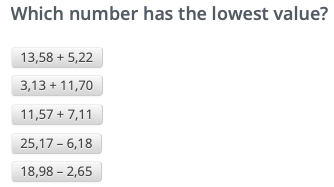
Lowest number


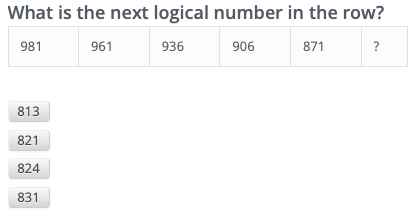
Number Sequences

Your task is to recognise the next logical number that fits into the given number line. The numbers could be added, divided, multiplied and subtracted.


Graphs and Tables

You get a graph or a table that contains various data. Based on the data, you have to calculate the corresponding question.


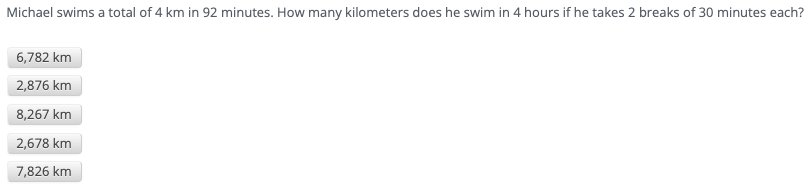
Calculations based on text

You receive an issue and have to calculate something.


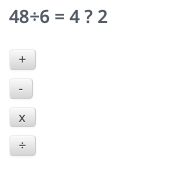
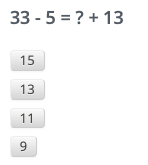
Equations

In this type of question, you are asked either which arithmetic sign or which number completes an equation. Both sides of the equation must have the same value.


Did you know?

Of all the areas that test ability, it is easiest to improve in the numerical area.

Preparations

Extensive preparation possibilities with Test The Talent.

Intensive preparation through practice tests, with the opportunity to consolidate learned content through constant repetition.

In addition, you will become more familiar with the tasks through practice, which will help you to remain calm under time pressure.

Start preparing as early as possible and find out where your strengths and weaknesses lie.

If, for example, you almost always got all the number sequence questions correct in the practice tests, but have problems with the text tasks, you should focus more on the text tasks.

In the case of task types that relate to graphics and tables, intensive preparation is even more important when it comes to achieving the best possible final result.

The graphics are structured similarly in all practice tests as well as in the real tests. The content differs, but the structure is the same.

So take advantage of the opportunity and know the tasks before the actual test.

Which companies put a special focus on good results in numerical tests?

In principle, almost all companies attach importance to their candidates having basic numerical/mathematical skills. Depending on the industry, however, it varies greatly how pronounced the skills should be.

However, you should achieve a particularly good score in the numerical part if you apply to a company that fills positions where special numerical and analytical skills are required. This includes positions in the IT, accounting and management consulting industries.

Likewise, your numerical skills should be strong if you are applying for a management position. These require advanced analytical skills, as well as a strong interest in numbers and mathematical expertise.

Candidates for management positions must be clearly convincing in many areas and should therefore achieve the best results in the ability test.

If your goal is to apply for a professional position, use Test The Talent’s practice tests to make sure you get the job. It won’t be easy, but with the right preparation, you’ll be a huge step ahead of your competitors. Take your chance!

https://testttalent.com/wp-content/uploads/2022/06/numerical-image.jpg 1000 1500 Thomas Anderson https://testttalent.com/wp-content/uploads/2022/12/ttt-logo.png Thomas Anderson2022-06-13 06:31:272026-02-18 13:53:29Numerical Tests – Everything you need to know!

The Best Preparation

Train for practically any employment test with Test The Talent. You will significantly improve your level and get one step closer to your dream job.

About Test The Talent

Test The Talent offers practice tests on a wide variety of employment tests. Our goal is to make test training as effective and educational as possible. We offer numerical, logical-inductive and verbal tests that are designed to correspond to real tests.

Articles – Test the Talent

  • e-stimate’s IQ Potential Test
  • People Test Person (PTP)
  • DISC Profile – Types and colors
  • Personality test as preparation for your job interview
  • Time Management and Strategies for Assessment Tests
  • Deductive Reasoning Test Practice
  • Practicing Mechanical Reasoning Tests
  • Numerical Tests – Everything you need to know!
  • Logical Tests – Why they are important in the Application Process
  • Personality Tests

Money Back Guarantee

If you are not satisfied with Test the Talent Premium Access, you will get your money back.

Test The Talent
2nd Floor, Berkeley Square House,
Berkeley Square, London W1J 6BD

support@testttalent.com

About Test The Talent

Test The Talent is a provider of assessment practice tests. Our goal is to prepare you for your recruitment test in the most effective and educational way possible. We offer numerical, logical-inductive and verbal tests designed to mirror the real-world assessments you’ll face on the path to your dream job.

More about Test The Talent

Available Tests

SHL Test

People Test Logic Test

ACE Cognitive Test

AON Online Assessment (CUT-e)

Eligo 

Garuda Logic Test

PI Cognitive Assessment

IST 2000 R Test

Thomas GIA Test

Talogy / Cubiks Test

Saville Test Practice

Matrigma

Mensa IQ Test

Other Tests

© 2026 Test The Talent – Disclaimer – Legal – Terms of use – Privacy policy

Scroll to top